This is a fun volunteer opportunity that I thought some of you may be
interested in! BeachCOMBERS which was founded at Moss Landing Marine
Labs back in the 90's is now managed by the US Fish and Wildlife Service
out of the Ventura office and has a long history in Monterey Bay. It's a
good excuse to get out and walk the same stretch of beach each month and
you learn a lot about bird ID from a very different perspective than
through bird behavior and movement. Feel free to share with anyone else
that you think might be interested!
Enjoy those spring birds,
Amanda
-------- Forwarded Message --------
Subject: BeachCOMBERS Virtual Training Registration
Date: Mon, 30 Mar 2026 14:58:29 -0700
From: North Coast BeachCOMBERS <beachcombersmb...>
To: North Coast BeachCOMBERS <beachcombersmb...>, Ventura
BeachCOMBERS, FWS8 <beachcombers...>
Hello Current and Prospective BeachCOMBERS,
We are excited to invite you to an upcoming virtual BeachCOMBERS
volunteer training on *May, 1st 2026 from 9-noon*. During the training
we will cover the fundamentals of the BeachCOMBERS program, survey
protocols, and marine mammal and seabird species ID. For our current
volunteers, please feel free to join us if you wish to brush up on your
skills. Please use the link below to register.
Background:
BeachCOMBERS is a long-term community science program that monitors the
health of coastal ecosystems in Central and Southern California. Founded
in 1997, BeachCOMBERS is a collaborative program powered by volunteers
and managed by the U.S. Fish and Wildlife Service (USFWS) in partnership
with California Department of Fish and Wildlife (CDFW). Through
BeachCOMBERS, trained volunteers survey selected sections of coastline
monthly from Santa Cruz to San Diego with the specific goal of
monitoring deposition of beach cast carcasses and oil presence to use as
a metric of coastal ecosystem conditions. BeachCOMBERS has provided data
for a number of scientific papers, contributed to the conservation of
marine resources, quantified oiled wildlife, and has informed resource
managers about wildlife entanglement from fishing gear and other
anthropogenic debris.
Volunteer requirements:
* Ability to walk on unstable ground (sand and cobble) for distances
between 2 to 6 miles
* Completion of volunteer trainings
* One-year commitment to survey an assigned beach one day during a low
tide within the first week of each month (2-6 hours)
We welcome you to share the attached registration link with anyone who
may be interested in joining the BeachCOMBERS program 😊
Date: 3/31/26 5:25 am From: Carol Pecot <carol.pecot...> Subject: [MBBIRDS] FOS Black-headed Grosbeak
FOS Black-headed Grosbeak seen today (male) up the mountain above Soquel/below Summit. It seemed early, but my bird arrival calendar confirmed this was a common time for us. I can hardly wait to hear the singing!
The Western Flycatchers are back at my house (Pleasant Valley, Aptos). They
nest here so I hope to experience at least one of the nests again this
season. One of the two nests I know about is on my porch and I've left it
there hoping that they'll use it again this year (it would be the third
year in a row if they do). The other nest is in my open-air tractor shed on
top of a fire extinguisher - it was a big surprise when I found that one a
few years ago! I had to wait to mow until the chicks fledged - it was a
small inconvenience for a great reward - three chicks fledged!
I also saw the Black-headed Grosbeaks at my feeder for the first time
yesterday. I was away all last week so they might have arrived earlier, but
for sure yesterday!
Cheers!
Debbie
On Sat, Mar 21, 2026 at 8:08 PM Kimberly Butts <kimberlygrey33...>
wrote:
> Hey!
>
> We heard a few over at Peckham last weekend, and then I heard many more
> today on the trail from Henry Cowell campground up to the observation deck.
> Even got lucky and got pics of one that was being very cooperative- right
> before it got into a spat with a Brown Creeper haha.
>
>
> --
> You received this message because you are subscribed to the Google Groups
> "mbbirds" group.
> To unsubscribe from this group and stop receiving emails from it, send an
> email to mbbirds+<unsubscribe...>
> To view this discussion visit
> https://groups.google.com/d/msgid/mbbirds/<7D9B3986-E7AC-4A6C-AC4D-855DBBFEBE71...> > .
>
>
>
> -Kim
>
> > On Mar 21, 2026, at 6:30 PM, larry corridon <larry961357...>
> wrote:
> > While hiking in Nicene Marks today, I heard many Pacific Wrens in full
> song and a couple of Western Flycatchers. I didn't see them, but their call
> is distinctive and Merlin confirmed after I listened to them. Have they
> been showing up? I haven't seen any postings, but I'm never sure when birds
> come in the spring. I count on others to let me know 😆
> >
> > Larry
> >
> > --
> > You received this message because you are subscribed to the Google
> Groups "mbbirds" group.
> > To unsubscribe from this group and stop receiving emails from it, send
> an email to mbbirds+<unsubscribe...>
> > To view this discussion visit
> https://groups.google.com/d/msgid/mbbirds/<4C329FF0-6DCC-4FA1-89C6-433A80888104...> > .
>
> --
> You received this message because you are subscribed to the Google Groups
> "mbbirds" group.
> To unsubscribe from this group and stop receiving emails from it, send an
> email to mbbirds+<unsubscribe...>
> To view this discussion visit
> https://groups.google.com/d/msgid/mbbirds/<7D9B3986-E7AC-4A6C-AC4D-855DBBFEBE71...> > .
>
Date: 3/27/26 10:24 am From: Paul Miller <paulbug.2876...> Subject: [MBBIRDS] White-throated Sparrow
My friendly tan-striped WTSP is still hanging around my yard. Observed him/her catching flies near my woodpile yesterday. Observing him as we speak, walking in my driveway. Has a favorite spot near some bricks. Let me know if you need one for your year list. Contact me offline. Easy to find and comfy around people. He'll be off soon. 831 334 4138 Paul Miller Mount Hermon
We heard a few over at Peckham last weekend, and then I heard many more today on the trail from Henry Cowell campground up to the observation deck. Even got lucky and got pics of one that was being very cooperative- right before it got into a spat with a Brown Creeper haha.
> On Mar 21, 2026, at 6:30 PM, larry corridon <larry961357...> wrote:
> While hiking in Nicene Marks today, I heard many Pacific Wrens in full song and a couple of Western Flycatchers. I didn't see them, but their call is distinctive and Merlin confirmed after I listened to them. Have they been showing up? I haven't seen any postings, but I'm never sure when birds come in the spring. I count on others to let me know 😆
>
> Larry
>
> --
> You received this message because you are subscribed to the Google Groups "mbbirds" group.
> To unsubscribe from this group and stop receiving emails from it, send an email to mbbirds+<unsubscribe...>
> To view this discussion visit https://groups.google.com/d/msgid/mbbirds/<4C329FF0-6DCC-4FA1-89C6-433A80888104...>
Date: 3/21/26 6:30 pm From: larry corridon <larry961357...> Subject: [MBBIRDS] Western Flycatcher
While hiking in Nicene Marks today, I heard many Pacific Wrens in full song and a couple of Western Flycatchers. I didn't see them, but their call is distinctive and Merlin confirmed after I listened to them. Have they been showing up? I haven't seen any postings, but I'm never sure when birds come in the spring. I count on others to let me know 😆
Date: 3/18/26 3:53 pm From: 'Pete Sole' via mbbirds <mbbirds...> Subject: [MBBIRDS] Rufous Hummer (photos) and other FOS
Hi birders,
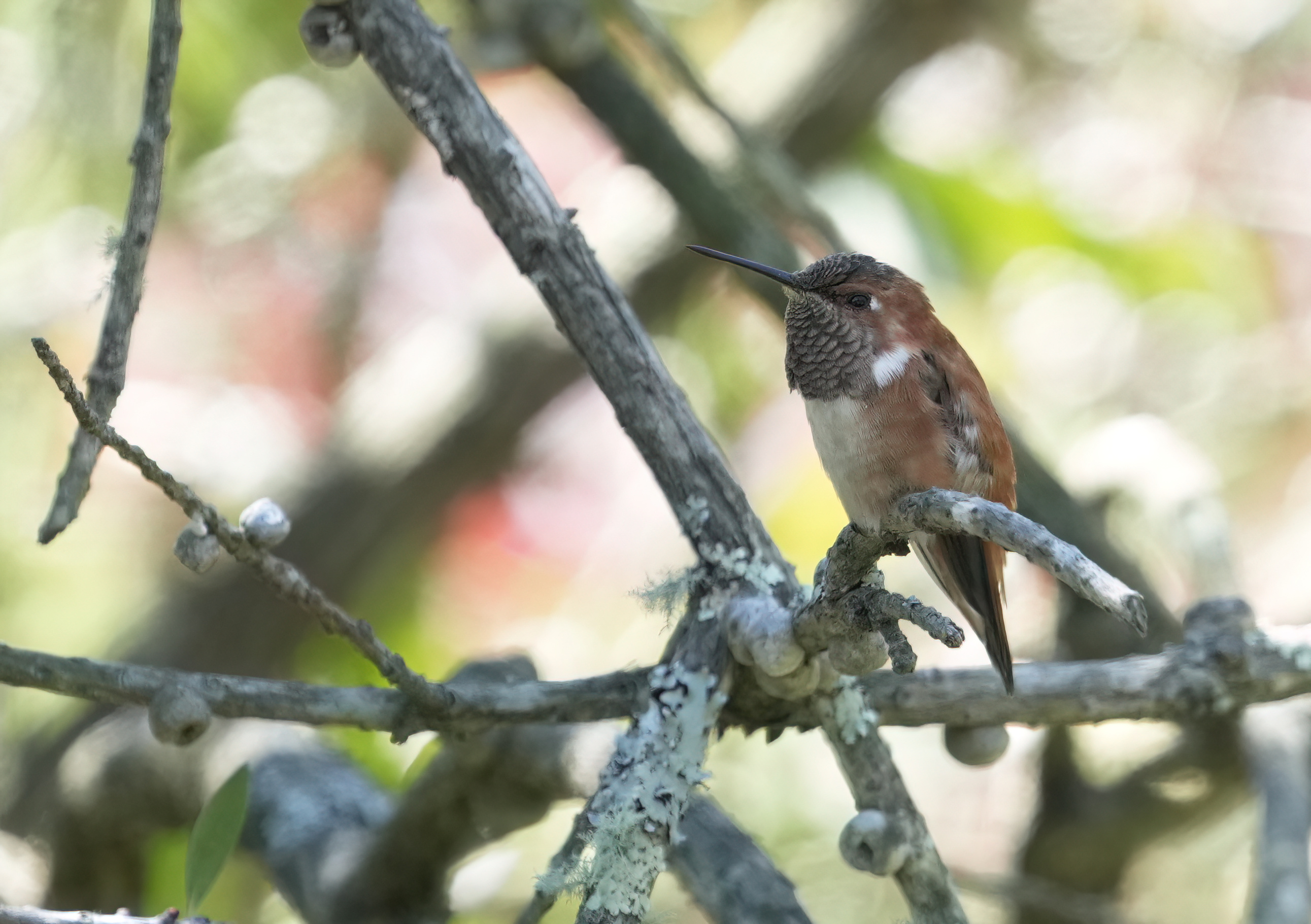
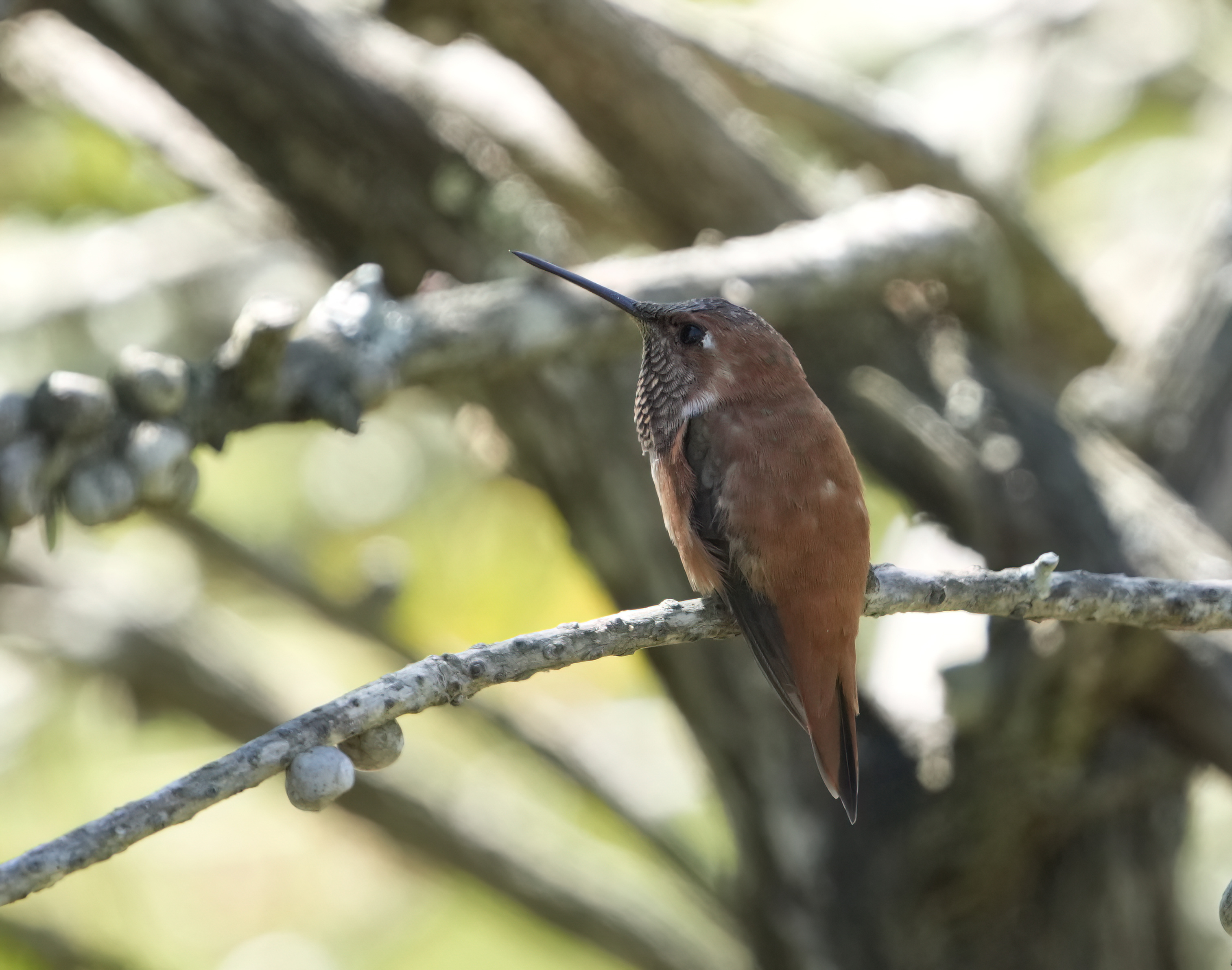
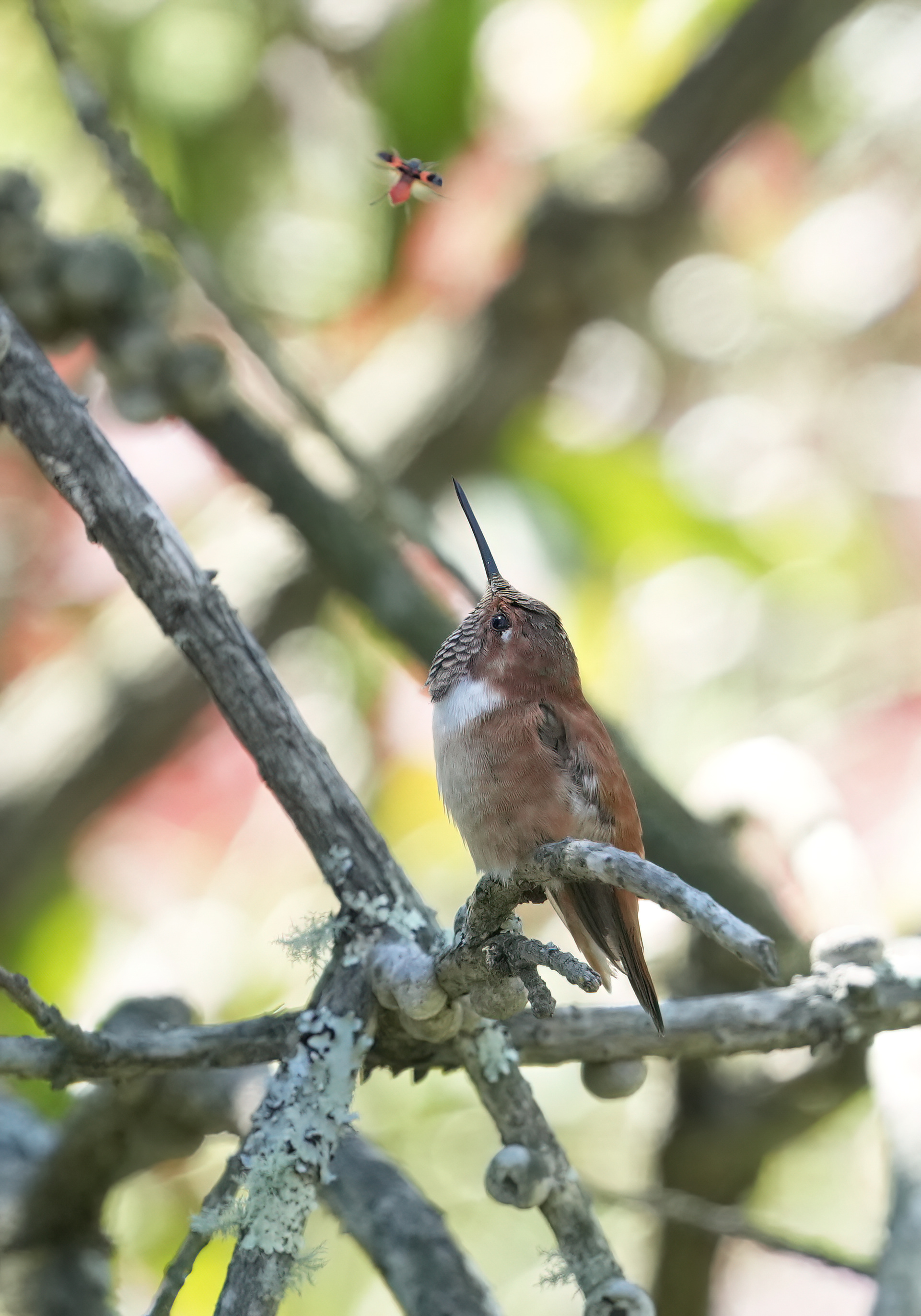
We had our first of season (FOS) RUFOUS HUMMINGBIRD in the garden today.
Managed to snap some so so images, but still good enough for ID,
including these three:
(Well the coloring looks like a warning, and it might be relatively big...)
Interestingly enough, it looks like this hummer is still molting into
it's breeding plumage. Yet it is still migrating to its breeding grounds
north. Also, although small about 3.75 inches in length, according to
the Cornell Bird's of the World online resources:
"The Rufous Hummingbird is North America's “extremist” hummingbird,
widely known in the west for its aggressive nature. Venturing far from
the equatorial tropics in which its ancestors evolved, it reaches the
northernmost latitude of any hummingbird (61° N). After making the
longest (measured in body lengths) known avian migration, individuals
from Alaskan populations face a short breeding season but the longest
day-length seen by any hummingbird."
In other migrant news, yesterday and today we heard our FOS WESTERN
FLYCATCHERS, affectionately known as Pac-slopes. At this point, I think
our only missing typical neighborhood breeding migrant, would be
black-headed grosbeaks. The grosbeaks should start showing up any day now.
Date: 3/18/26 12:54 pm From: silverbirder via mbbirds <mbbirds...> Subject: [MBBIRDS] First of the season
On March 16 we had a gorgeous male Rufous hummingbird show up here on The Land in Royal Oaks. Now all we are missing are the Black-headed Grosbeaks, Olive-sided Flycatchers, Barn and Violet-green swallows.
Happy Birding, Laura and Betty
Date: 3/17/26 3:07 pm From: silverbirder via mbbirds <mbbirds...> Subject: [MBBIRDS] First of the season
Western Flycatcher showed up down on The Land in Royal Oaks yesterday March 17 Happy Birding, Laura and Betty
-- You received this message because you are subscribed to the Google Groups "mbbirds" group. To unsubscribe from this group and stop receiving emails from it, send an email to mbbirds+<unsubscribe...> To view this discussion visit https://groups.google.com/d/msgid/mbbirds/<239961754.22328.1773785259029...>
Date: 3/15/26 6:26 pm From: silverbirder via mbbirds <mbbirds...> Subject: [MBBIRDS] First of the season
Yesterday we had a beautiful male Wilson's warbler show up at our bird bath down here on The Land in Royal Oaks Happy Birding, Laura and Betty
-- You received this message because you are subscribed to the Google Groups "mbbirds" group. To unsubscribe from this group and stop receiving emails from it, send an email to mbbirds+<unsubscribe...> To view this discussion visit https://groups.google.com/d/msgid/mbbirds/<853317675.950901.1773624374547...>
Date: 3/15/26 10:29 am From: Ryan Phillips <norcalbirding...> Subject: Re: [MBBIRDS] Migration Musings
Good timing as I was going to post that I had my FOS WESTERN WARBLING VIREO
yesterday (rare on eBird by a day!) at Glenwood Reserve (West trails) and
today at the same location my FOS WESTERN FLYCATCHER and now 3 WESTERN
WARBLING VIREOS. In the past couple weeks a huge influx of ORANGE-CROWNED
WARBLERS.
Ruby-crowned Kinglets and Townsend's Warblers are in full song now as they
prepare for departure.
So, definitely migration is on for arrivals returning. Breeders/residents
are busy singing.
With this heatwave the activity and movement us going to change quickly!
Enjoy this fun and exciting spring time. My favorite time of the year as I
know most like fall vagrant season.
Good Birding,
Ryan
*Ryan Phillips* ǀ Owner and Guide
Personal and Group Birding Excursions in Northern California and Beyond
"Everyone likes birds. What wild creature is more accessible to our eyes
and ears, as close to us and everyone in the world, as universal as a bird?"
- Sir David Attenborough
On Sun, Mar 15, 2026, 10:01 AM 'Pete Sole' via mbbirds <
<mbbirds...> wrote:
> Hi birders,
>
> Last night I checked Cornell's Birdcast Migration resources, and was
> happy to see the beginnings of bird migration movement. Specifically, we
> had a small bump of activity early in the evening, the second small
> migration bump of the season. ( For those that are curious about the
> data, see the Santa Cruz county migration dashboard
> at: https://dashboard.birdcast.org/region/US-CA-087 )
>
> My guess at this point, is that the migration activity is mostly birds
> starting to leave, rather than arrive. But we've already had a number of
> migrant species return. Three of five migrant species that I track, that
> breed in my neighborhood, have already shown up; an early male Hooded
> Oriole, multiple Violette-green Swallows, and one Allen's Hummingbird.
> In the coming weeks I'll be looking for more of the same as well as,
> Black-headed Grosbeaks, and Western Flycatchers, which have already
> landed in other parts of the county.
>
> Still present Golden-crowned and some White-crowned Sparrows, as well as
> Yellow-rumped Warblers are molting, before they migrate to their
> breeding grounds. In the case of the Golden-crowned Sparrows, they breed
> in Alaska and Canada. Both, molting into breeding plumage and migration
> flight, have very high energy requirements. So most species molt before,
> or after arriving on their breeding grounds. Very few species molt into
> breeding plumage and migrate at the same time. Those that do so, usually
> molt at a temporary stop, before continuing on their journey, but even
> then, there are exceptions.
>
> Hermit Thrushes are still present, but in the coming weeks, they too
> will leave our coast. Some heading as far north as Alaska, while perhaps
> a small number, make a much shorter flight to the Santa Cruz mountains
> to breed.
>
> Migration, one of the wonders of the natural world.
>
> Pete Solé
>
> appreciating migrants in Soquel, CA
>
> --
> You received this message because you are subscribed to the Google Groups
> "mbbirds" group.
> To unsubscribe from this group and stop receiving emails from it, send an
> email to mbbirds+<unsubscribe...>
> To view this discussion visit
> https://groups.google.com/d/msgid/mbbirds/<d944655e-3498-4e77-b8d4-e3c76e338367...> > .
>
Date: 3/15/26 10:01 am From: 'Pete Sole' via mbbirds <mbbirds...> Subject: [MBBIRDS] Migration Musings
Hi birders,
Last night I checked Cornell's Birdcast Migration resources, and was
happy to see the beginnings of bird migration movement. Specifically, we
had a small bump of activity early in the evening, the second small
migration bump of the season. ( For those that are curious about the
data, see the Santa Cruz county migration dashboard
at: https://dashboard.birdcast.org/region/US-CA-087 )
My guess at this point, is that the migration activity is mostly birds
starting to leave, rather than arrive. But we've already had a number of
migrant species return. Three of five migrant species that I track, that
breed in my neighborhood, have already shown up; an early male Hooded
Oriole, multiple Violette-green Swallows, and one Allen's Hummingbird.
In the coming weeks I'll be looking for more of the same as well as,
Black-headed Grosbeaks, and Western Flycatchers, which have already
landed in other parts of the county.
Still present Golden-crowned and some White-crowned Sparrows, as well as
Yellow-rumped Warblers are molting, before they migrate to their
breeding grounds. In the case of the Golden-crowned Sparrows, they breed
in Alaska and Canada. Both, molting into breeding plumage and migration
flight, have very high energy requirements. So most species molt before,
or after arriving on their breeding grounds. Very few species molt into
breeding plumage and migrate at the same time. Those that do so, usually
molt at a temporary stop, before continuing on their journey, but even
then, there are exceptions.
Hermit Thrushes are still present, but in the coming weeks, they too
will leave our coast. Some heading as far north as Alaska, while perhaps
a small number, make a much shorter flight to the Santa Cruz mountains
to breed.
Migration, one of the wonders of the natural world.
Date: 3/12/26 5:17 pm From: Karen Kreiger <karenkreiger...> Subject: [MBBIRDS] California Bird Atlas Update and March 19 Town Hall
Hi Birders,
As many of you know, California’s first statewide Breeding Bird Atlas
launched on January 1, 2026. The level of participation across the state
has been remarkable, breeding code use in January and February was up a
staggering +545% over last year.
*Our local stats as of March 12, for Monterey County*:
• 160 atlasers have joined the project and submitted at least one
checklist
• 146 of 354 blocks have Atlas data (~41.24%)
• 130 species have had breeding codes assigned
• 29 species have confirmed breeding codes
*As of March 12, for Santa Cruz County:*
• 60 atlasers have joined the project and submitted at least one
checklist
Participating is very similar to how you already use eBird, but opting into
the Atlas ensures your observations become part of the permanent statewide
dataset being built to guide conservation and land management decisions for
decades to come.
Thank you all for joining the project. It has been inspiring to see the
California birding community come together around this effort, and we are
only just getting started.
Date: 3/11/26 7:29 am From: 'Pete Sole' via mbbirds <mbbirds...> Subject: [MBBIRDS] Re: Gull Herring or Vega or What the ...?
Thanks to all the responders!
The consensus is a second cycle American Herring Gull.
Appreciate the ID help from the community,
Pete
On 3/10/26 10:41 PM, Pete Sole wrote:
> Hi birders,
>
> After photographing the BLACK SKIMMER for a few hours, I turned my
> attention to gulls and photographed this bird:
>
> https://www.lighthousenet.com/photos/birds/odd/gull_herring_vega_9540_crop.jpg >
>
> I'm guessing this is one of those second? cycle Herring / Vega type
> gulls, but it would be great to get insight from the gull experts. In
> the ebird report, I called it an American Herring Gull but now I'm not
> so sure. The dark primaries rule out Iceland Gull... or so I'm
> thinking...
>
> Your thoughts? All insight appreciated.
>
> Pete (sinking to immature gull id) Solé
>
>
Date: 3/10/26 11:03 pm From: 'Pete Sole' via mbbirds <mbbirds...> Subject: Re: [MBBIRDS] Gull Herring or Vega or What the ...?
Thanks Phil,
I think the very pale eye, pink feet, and over all size (I know, the
size is hard to judge from this photo) would rule out Ring-billed ... or
so I'm guessing. Just hope I'm not tying myself in knots over some odd
ball hybrid... lol
Pete
On 3/10/26 10:56 PM, Phil Brown wrote:
> immature ring-billed I think, Phil
>
> On Tue, Mar 10, 2026, 22:41 'Pete Sole' via mbbirds
> <mbbirds...> wrote:
>
> Hi birders,
>
> After photographing the BLACK SKIMMER for a few hours, I turned my
> attention to gulls and photographed this bird:
>
> https://www.lighthousenet.com/photos/birds/odd/gull_herring_vega_9540_crop.jpg >
> I'm guessing this is one of those second? cycle Herring / Vega type
> gulls, but it would be great to get insight from the gull experts. In
> the ebird report, I called it an American Herring Gull but now I'm
> not
> so sure. The dark primaries rule out Iceland Gull... or so I'm
> thinking...
>
> Your thoughts? All insight appreciated.
>
> Pete (sinking to immature gull id) Solé
>
>
> --
> You received this message because you are subscribed to the Google
> Groups "mbbirds" group.
> To unsubscribe from this group and stop receiving emails from it,
> send an email to mbbirds+<unsubscribe...>
> <mailto:mbbirds%<2Bunsubscribe...>.
> To view this discussion visit
> https://groups.google.com/d/msgid/mbbirds/<1f2e3591-a9cc-4ddf-acd6-d0b5b393f55d...> >
Date: 3/10/26 10:56 pm From: Phil Brown <pdpbrown...> Subject: Re: [MBBIRDS] Gull Herring or Vega or What the ...?
immature ring-billed I think, Phil
On Tue, Mar 10, 2026, 22:41 'Pete Sole' via mbbirds <
<mbbirds...> wrote:
> Hi birders,
>
> After photographing the BLACK SKIMMER for a few hours, I turned my
> attention to gulls and photographed this bird:
>
>
> https://www.lighthousenet.com/photos/birds/odd/gull_herring_vega_9540_crop.jpg >
> I'm guessing this is one of those second? cycle Herring / Vega type
> gulls, but it would be great to get insight from the gull experts. In
> the ebird report, I called it an American Herring Gull but now I'm not
> so sure. The dark primaries rule out Iceland Gull... or so I'm thinking...
>
> Your thoughts? All insight appreciated.
>
> Pete (sinking to immature gull id) Solé
>
>
> --
> You received this message because you are subscribed to the Google Groups
> "mbbirds" group.
> To unsubscribe from this group and stop receiving emails from it, send an
> email to mbbirds+<unsubscribe...>
> To view this discussion visit
> https://groups.google.com/d/msgid/mbbirds/<1f2e3591-a9cc-4ddf-acd6-d0b5b393f55d...> > .
>
I'm guessing this is one of those second? cycle Herring / Vega type
gulls, but it would be great to get insight from the gull experts. In
the ebird report, I called it an American Herring Gull but now I'm not
so sure. The dark primaries rule out Iceland Gull... or so I'm thinking...
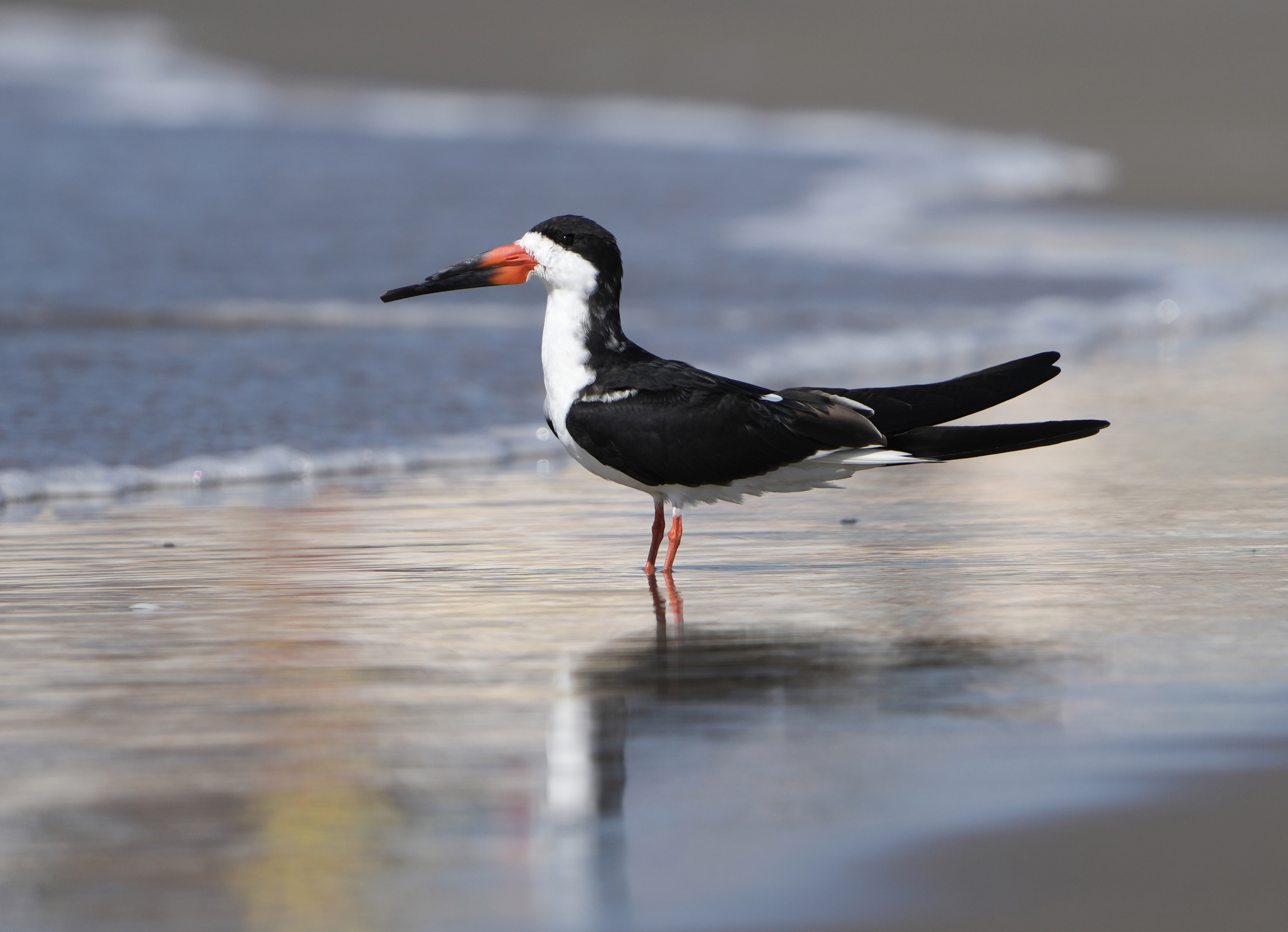
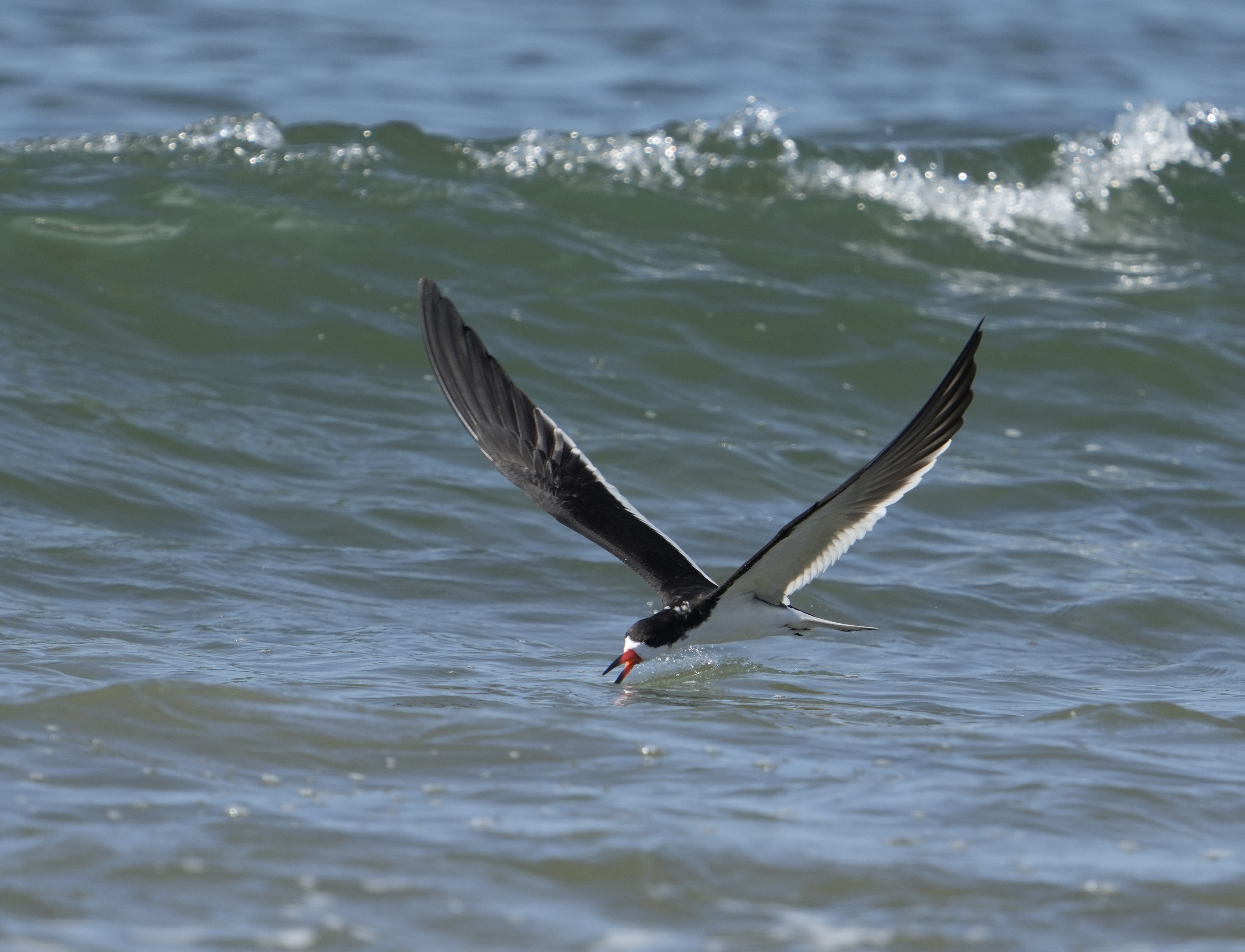
Date: 3/10/26 9:14 pm From: 'Pete Sole' via mbbirds <mbbirds...> Subject: [MBBIRDS] Black Skimmer Photos (San Lorenzo River Mouth)
Hi birders,
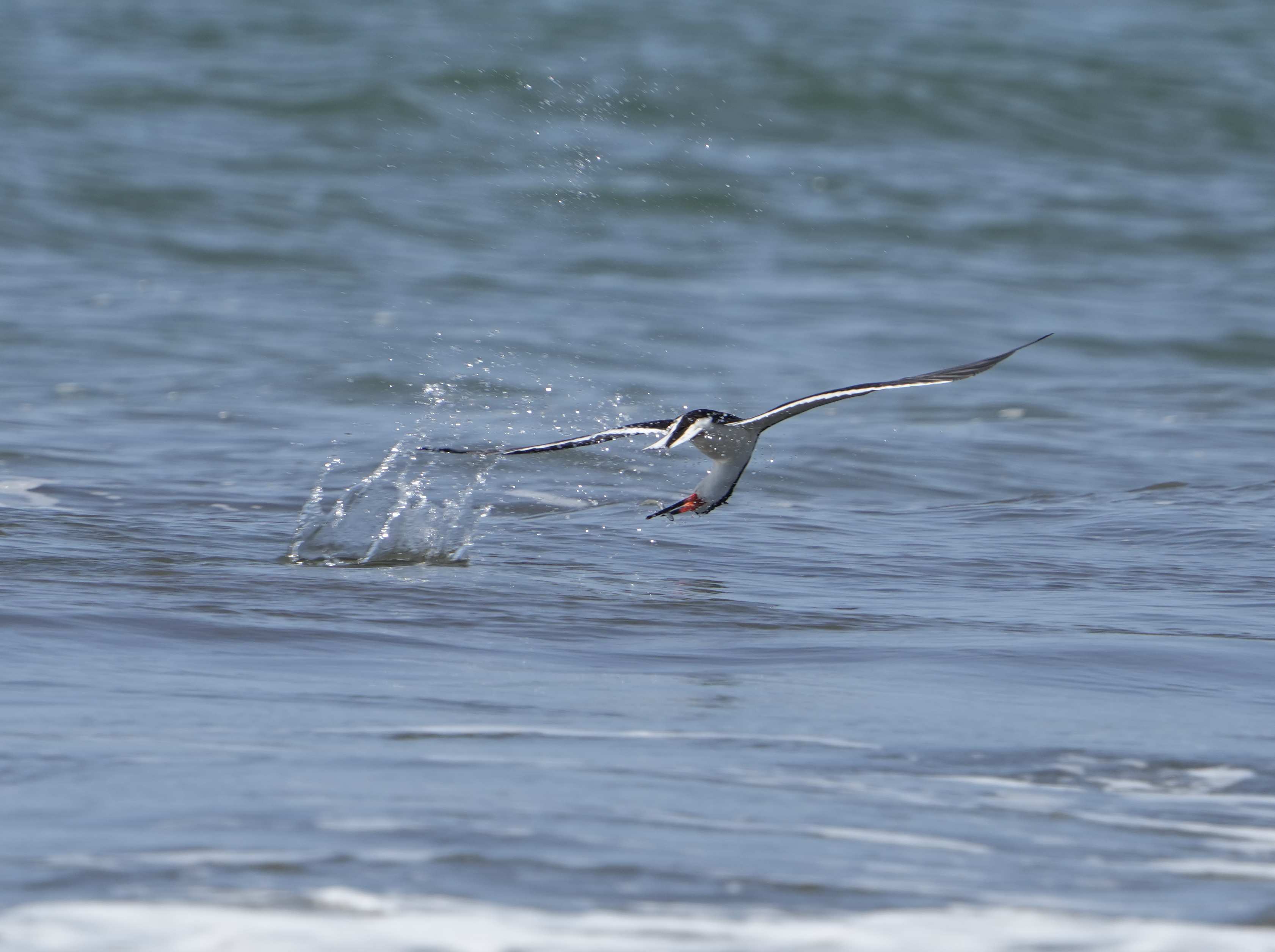
Tuesday morning, Alex R. found and reported a BLACK SKIMMER on ebird, at
the San Lorenzo River Mouth. (Thanks Alex!). The bird remained present
off and on during the day.
The bird skimmed in a narrow band along the beach, from roughly the
river mouth to the wharf. It also posed multiple times in good light on
the beach. I took over 1300 images. After reviewing and editing some
1000 pictures, (only about 300 more to go), here are links to some of
the better hi-res photos, best enjoyed on a big screen imho:
Date: 3/10/26 3:14 pm From: silverbirder via mbbirds <mbbirds...> Subject: [MBBIRDS] First of the season
A beautiful male Hooded Oriole showed up in our yard today down here on The Land in Royal Oaks. The earliest it has ever shown up in the 30 years I have been keeping track of themLaura and Betty
> On Mar 10, 2026, at 12:03 PM, 'Pete Sole' via mbbirds <mbbirds...> wrote:
>
> Hi birders,
>
> This morning there is a phenomenal BLACK SKIMMER at the San Lorenzo River Mouth in Santa Cruz.
>
> If you’re patient, it will reward you with incredible views. Photos to me. (I only took about 1100). As I type this I’m watching it skim.
>
> Pete Solé
>
> Sent from my iPhone
>
> --
> You received this message because you are subscribed to the Google Groups "mbbirds" group.
> To unsubscribe from this group and stop receiving emails from it, send an email to mbbirds+<unsubscribe...>
> To view this discussion visit https://groups.google.com/d/msgid/mbbirds/<6F9195BE-D5C0-4697-A540-1653B28B5845...>
Date: 3/8/26 8:05 am From: larry corridon <larry961357...> Subject: [MBBIRDS] Even the fastest bird on Earth can’t outfly bird flu - Lookout Santa Cruz
Here is an article about peregrine falcons and the bird flu. I'm not sure if it's already been posted so I thought I'd put it out again. It's in Lookout the online santa Cruz newspaper.
Hi Chris, everyone-
All North American sapsuckers have a large white wing patch; be they
Red-breasted, Red-Naped, Yellow-bellied, or Williamson's. The key to their
identification is their facial and nape patterns, and, to a lesser degree,
their throats and upper breasts. Back color is a quick fix for a male
Williamson's, as they're all black, and can be helpful as a consideration
when looking at all aspects of the color pattern of an individual bird.
Willy's are pretty distinctive in both sexes from all the other sapsucker
species though, so that shouldn't be an issue. Red-breasted is also pretty
distinctive; with a head that is almost entirely red, and lacking a black &
white facial pattern. The bird you photographed falls into this category.
Red-naped vs. Yellow-bellied, and hybrids of the two (or Red-breasted
hybrids) is where the challenges lie. In those cases I would encourage
anyone to take copious notes of the facial pattern (or, better yet, as many
photos as possible) and compare to field guides and other on-line
resources. Key points to focus on include the/any red on the nape and on
the throat, and the pattern of black bordering the red on the throat.
And even with great views and photos, the specific parentage/species of
some individuals just can't be determined sans a DNA test. But that's what
makes birding fun, right? The challenges are as much a part of it as are
the sure things~
Clay Kempf
Elkhorn
On Wed, Mar 4, 2026 at 4:31 PM Chris Soriano <soriano151...> wrote:
> Now I am finding lots of pics of the red breasted with a large white patch
> on the outside of the wing, what should I be looking for?
>
> On Wed, Mar 4, 2026 at 4:29 PM Chris Soriano <soriano151...> wrote:
>
>> Here is a photo of the possible red naped /red breasted sapsucker hybrid,
>> hoping someone can confirm.
>>
>> On Mon, Mar 2, 2026 at 5:04 PM Chris Soriano <soriano151...>
>> wrote:
>>
>>> I just had a red naped /red breasted sapsucker hanging out at some well
>>> established wells in my backyard (no pun intended). Completely red head,
>>> but huge white patches on the outer wing that matched online pics. I will
>>> upload my pics to eBird later, but I was curious if this was common in
>>> Santa Cruz. I usually just see the red-breasted, but there was a confirmed
>>> yellow-bellied sapsucker in my yard on the same wells a few years back. I
>>> saw one once in Yosemite maybe like 10 or 11 years ago. Fortunately the
>>> wells are on the invasive cotoneaster in my neighbor's yard.
>>>
>> --
> You received this message because you are subscribed to the Google Groups
> "mbbirds" group.
> To unsubscribe from this group and stop receiving emails from it, send an
> email to mbbirds+<unsubscribe...>
> To view this discussion visit
> https://groups.google.com/d/msgid/mbbirds/CAHCdUzU_5ffdao6X%3DJYB%<2BGyRV5Un3LBAwf1UJt3yNSUR9dEzfw...> > <https://groups.google.com/d/msgid/mbbirds/CAHCdUzU_5ffdao6X%3DJYB%<2BGyRV5Un3LBAwf1UJt3yNSUR9dEzfw...>?utm_medium=email&utm_source=footer> > .
>
Date: 3/7/26 9:52 am From: Kent Johnson <kentjohnson...> Subject: [MBBIRDS] Re: good news, bad news
Oops again, that should have been June, not Jean.
________________________________
From: <mbbirds...> <mbbirds...> on behalf of Kent Johnson <kentjohnson...>
Sent: Saturday, March 7, 2026 9:50 AM
To: <mbbirds...> <mbbirds...>
Subject: [MBBIRDS] good news, bad news
Date: 3/4/26 7:40 pm From: <aztec......> <aztecrasta...> Subject: [MBBIRDS] Red-breasted Sapsucker today near the entrance of Henry Cowell State Park
I saw a Red-breasted Sapsucker today near the entrance of Henry Cowell State Park in what appeared to be a large maple tree, here is the photo: https://flic.kr/p/2rZDbRo
Now I am finding lots of pics of the red breasted with a large white patch
on the outside of the wing, what should I be looking for?
On Wed, Mar 4, 2026 at 4:29 PM Chris Soriano <soriano151...> wrote:
> Here is a photo of the possible red naped /red breasted sapsucker hybrid,
> hoping someone can confirm.
>
> On Mon, Mar 2, 2026 at 5:04 PM Chris Soriano <soriano151...> wrote:
>
>> I just had a red naped /red breasted sapsucker hanging out at some well
>> established wells in my backyard (no pun intended). Completely red head,
>> but huge white patches on the outer wing that matched online pics. I will
>> upload my pics to eBird later, but I was curious if this was common in
>> Santa Cruz. I usually just see the red-breasted, but there was a confirmed
>> yellow-bellied sapsucker in my yard on the same wells a few years back. I
>> saw one once in Yosemite maybe like 10 or 11 years ago. Fortunately the
>> wells are on the invasive cotoneaster in my neighbor's yard.
>>
>
Here is a photo of the possible red naped /red breasted sapsucker hybrid,
hoping someone can confirm.
On Mon, Mar 2, 2026 at 5:04 PM Chris Soriano <soriano151...> wrote:
> I just had a red naped /red breasted sapsucker hanging out at some well
> established wells in my backyard (no pun intended). Completely red head,
> but huge white patches on the outer wing that matched online pics. I will
> upload my pics to eBird later, but I was curious if this was common in
> Santa Cruz. I usually just see the red-breasted, but there was a confirmed
> yellow-bellied sapsucker in my yard on the same wells a few years back. I
> saw one once in Yosemite maybe like 10 or 11 years ago. Fortunately the
> wells are on the invasive cotoneaster in my neighbor's yard.
>
I just had a red naped /red breasted sapsucker hanging out at some well established wells in my backyard (no pun intended). Completely red head, but huge white patches on the outer wing that matched online pics. I will upload my pics to eBird later, but I was curious if this was common in Santa Cruz. I usually just see the red-breasted, but there was a confirmed yellow-bellied sapsucker in my yard on the same wells a few years back. I saw one once in Yosemite maybe like 10 or 11 years ago. Fortunately the wells are on the invasive cotoneaster in my neighbor's yard.